For workshops · reading a render
A render closes a deal when it answers the three questions the client has not asked out loud: what exactly am I getting, will it fit my space, and is this worth what you are charging me. An image that is beautiful but does not answer those three is decoration. Below is how to check yours before you send it.
The three questions
The client is not buying "a kitchen": he is buying a number of drawers, a type of front, a handle he will touch every day. If your image hides the inside of the closet or blurs the hardware, the client fills the gap with his imagination — and his imagination is always cheaper than your quote. Show the parts that justify the price.
This is where most renders quietly fail. A piece floating on a white background proves nothing. The same piece shown against the real wall, with the real ceiling height and the real window, answers the question that stops the sale. This is also why measurements matter more than style: an image built from invented dimensions will look right and be unbuildable.
Price objections are usually comparison problems. When the client cannot see the difference between your work and a cheaper shop's, the only visible difference is the price. A render that shows the joinery, the interior fittings and the finish is what makes the comparison visible.
The evidence
Research published in the Journal of Marketing in 2022 found that visualisation lifts sales most in three conditions: when the product is expensive, when it is made to order, and when the brand is not yet well known to the buyer. That is a precise description of a custom furniture workshop quoting a private client.
My own numbers point the same way, and I will give them with their limits: between 2013 and 2017, in Mexico, presenting projects with these images, I closed one out of every two quotes I presented, with an average ticket of about 31,000 Mexican pesos. That is my history in another market and another decade — not a promise about yours.
One more thing worth knowing: deals rarely close on the first contact. In my own experience conversions tend to land on the third. The render is what gives you a reason to come back a second and a third time without sounding like you are chasing.
The honest part
It does not rescue a bad design. If the layout does not work, a good image only makes the problem more expensive to discover.
It does not guarantee the sale. It removes one specific obstacle — the client not being able to picture it — and leaves all the others exactly where they were: your price, your lead time, and whether he trusts you.
And it is not a photograph. Light and finish are an interpretation. What must match reality is the geometry: the measurements, the proportions and the parts. That is the part I put my name on.
Buildability guarantee
It can. I am an architect: every measurement matches what can actually be built. If your workshop cannot build it as drawn, I correct it at no cost.
Shmuel Nyssen, Architect
Real project · render → built
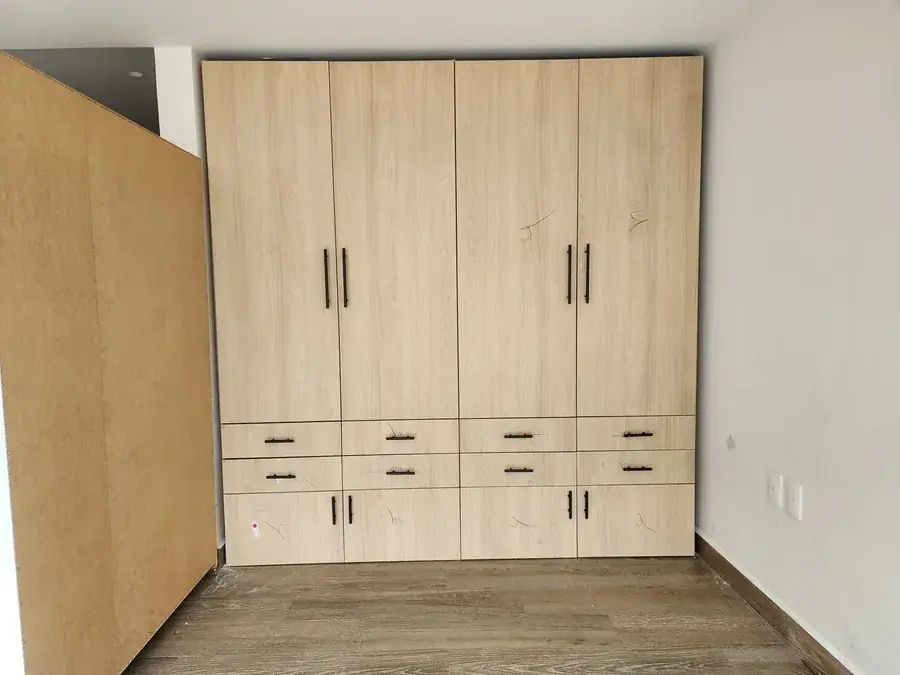
A custom closet ordered by an architecture studio in Mexico City. On the left, the image the client said yes to. On the right, the finished unit: same layout, same shelves, same drawer arrangement that were approved on screen. The client chose the final finish with the workshop.
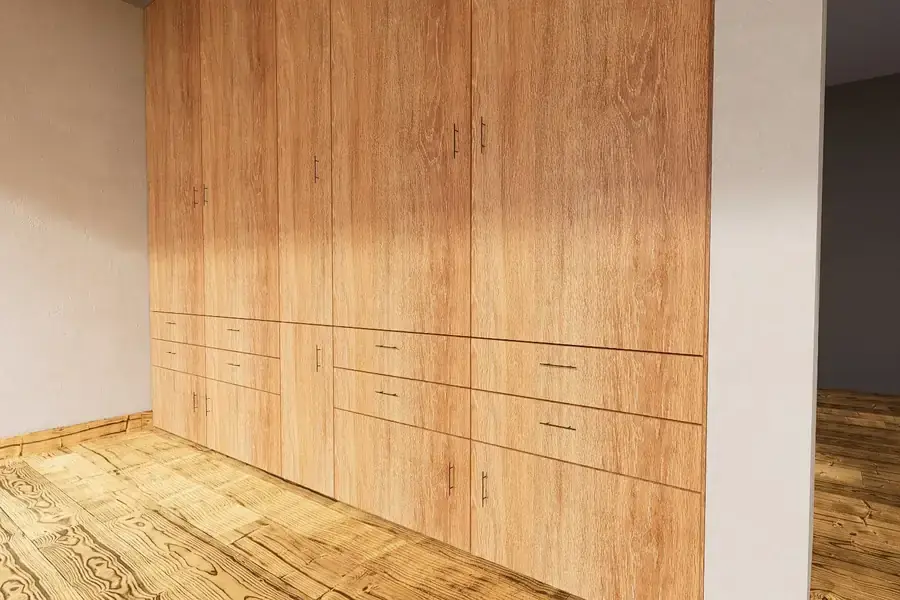
Showing the result before producing it lifts sales most in exactly this kind of work: expensive, made to measure, and from a brand the buyer does not know yet (Journal of Marketing, 2022).
Pick one quote that is open on your desk right now. The first image reaches you within 48 hours, and the pilot is ₪200 on account — it comes off the package in full when you continue.
I have a question about my quoteWhatsApp +52 56 6406 1309